
Why this made the list
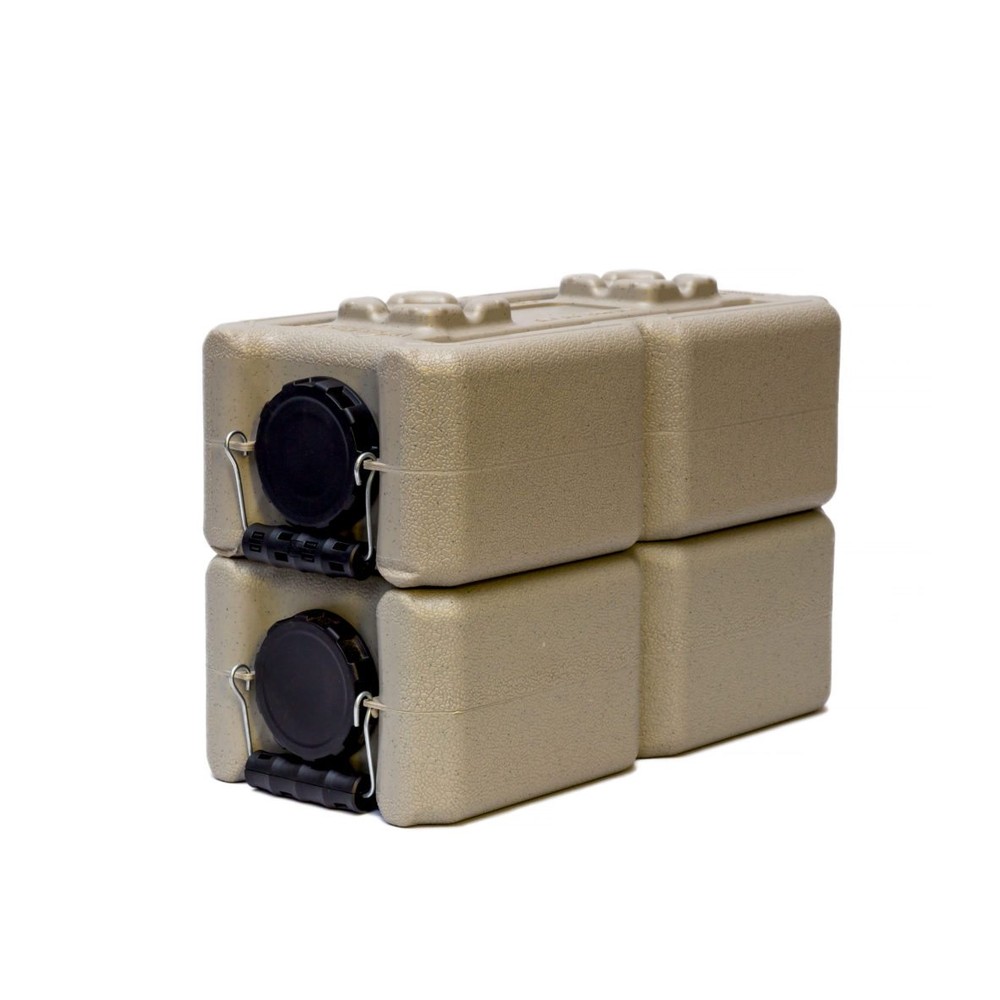
Most emergency water storage advice eventually runs into the same problem: barrels and jugs are awkward to store, hard to move when full, and don't stack cleanly with anything else. WaterBrick's interlocking, brick-shaped containers are built specifically to solve that storage problem rather than just holding water.
What it actually does
Each container holds 3.5 gallons and is made from food-grade, BPA-free HDPE plastic, the same category of material used in other food storage containers. The bricks interlock when stacked, which keeps a wall of them from sliding or toppling the way loose jugs can, and they're rated to cross-stack up to four feet high. A full 3.5-gallon brick weighs around 30 pounds, manageable for one person with the built-in handle, though moving a stack of several at once is still real work. The wide-mouth lid is designed for hand access, so beyond water they're also marketed for dry food storage, rice, beans, sugar, pet food, since the wide opening makes scooping and cleaning easier than a narrow-neck jug.
Who this is actually for
Someone building out a real emergency water reserve who wants it to actually fit in a closet, under a bed, or in a garage corner instead of taking over a room, and who values dual-purpose storage that can hold dry food between water needs. It's not the cheapest way to store a given volume of water.
What to weigh before buying
- Cost per gallon is higher than large water drums or barrels, you're paying for the stackable, modular format, not just raw storage volume.
- Each brick has its own cap and seal, so a stack of ten means ten individual points to check for leaks rather than one.
- Filling and rotating water across many individual bricks takes longer than filling one large container.
- At about 30 pounds full, a single brick is manageable, but a full stack of several represents real weight to move if you ever need to relocate them.
The verdict
A genuinely practical solution to the real problem of storing water in a space that doesn't have room for barrels. The per-gallon cost and the extra maintenance of tracking multiple sealed units are real tradeoffs, but for anyone short on storage space, the stackable format solves a problem cheaper containers don't.