
Why this made the list
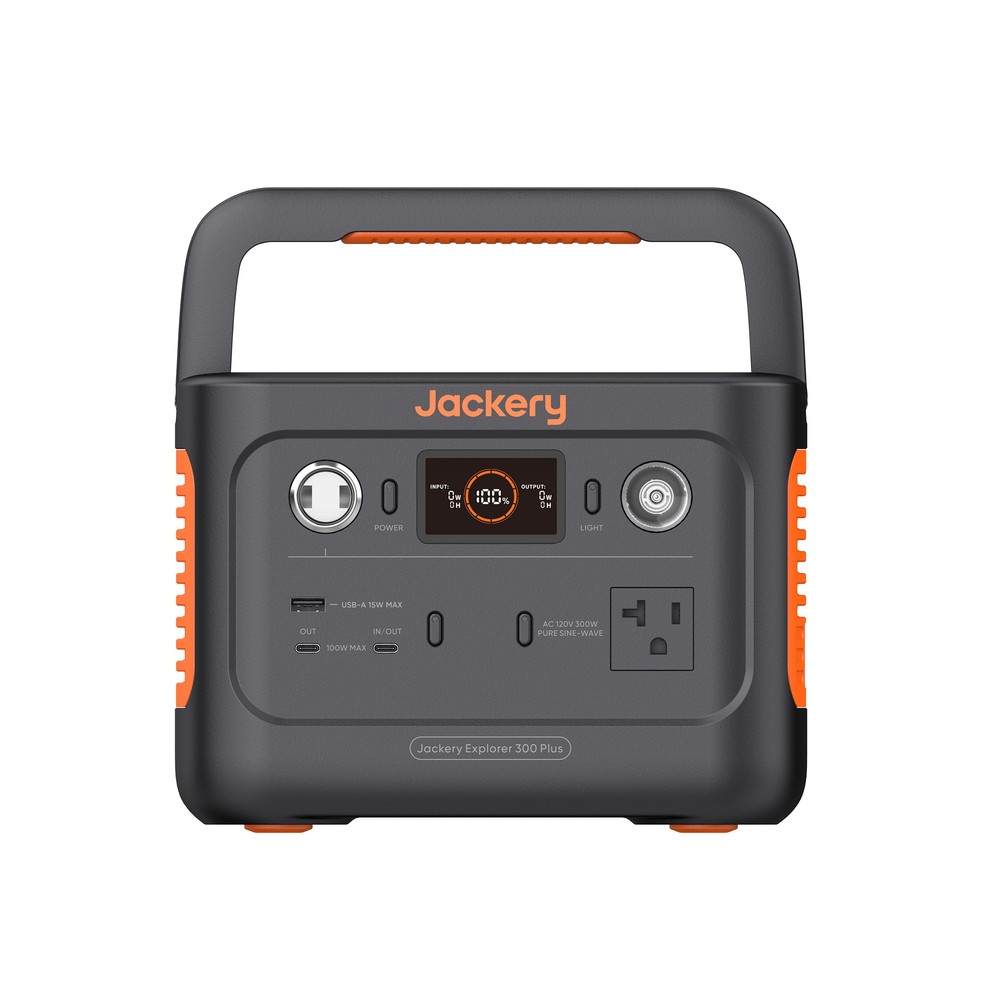
Power stations get expensive fast once you're into the 1,000Wh-plus range, and a lot of people don't need that much. The Explorer 300 Plus sits at the small end of the category on purpose: a 288Wh LiFePO4 battery in a package that weighs around 8 pounds, small enough to keep in a car trunk or closet instead of a garage shelf.
What it actually does
It stores 288Wh and puts out up to 300W continuous through a single AC outlet, a USB-C PD port, and a car-style DC port. That's enough to keep a phone and laptop charged for several days, run a CPAP machine overnight, or top off a small camera battery kit. It won't run a microwave, a kettle, or anything else that draws serious wattage, and reviewers note the single AC outlet means you can't run more than one plugged-in device at a time. The LiFePO4 battery chemistry is the main upgrade over older Jackery models, rated for a longer cycle life than the lithium-ion cells in cheaper units. Full recharge from Jackery's optional 100W solar panel takes around 4 hours in good sun; the panel isn't included and adds to the total cost.
Who this is actually for
Someone who wants a grab-and-go backup for phones, laptops, and small electronics during a short outage or a weekend camping trip, not someone trying to run a fridge or power tools. It's also a reasonable pick for a first power station, since it's cheap enough to try without committing to the bigger, pricier tiers in the lineup.
What to weigh before buying
- One AC outlet means you can't run more than one plugged-in appliance at once, a real limitation if you're powering more than a laptop or a lamp.
- 300W output rules out anything with a heating element or a motor that draws real power, this is small-device backup, not home backup.
- The solar panel that makes off-grid recharging practical is sold separately, so the effective cost is higher than the unit price alone.
- At this capacity tier there's real competition from other brands at similar or lower prices, so it's worth comparing before assuming Jackery's name is the deciding factor.
The verdict
A solid, portable entry point into power stations for anyone who just needs to keep phones and small electronics alive through a short outage or a weekend outside. It's not built to replace a generator, and the single AC outlet is a real constraint, but for its actual job it does what it says.