
Why this made the list
This sits in the gap between a hand-crank washer and a full automatic machine. It's the pick for anyone who has a little bit of power to spare (an outlet, a generator, an inverter running off a power station) and wants the motor to do the agitating and spinning instead of an arm.
What it actually does
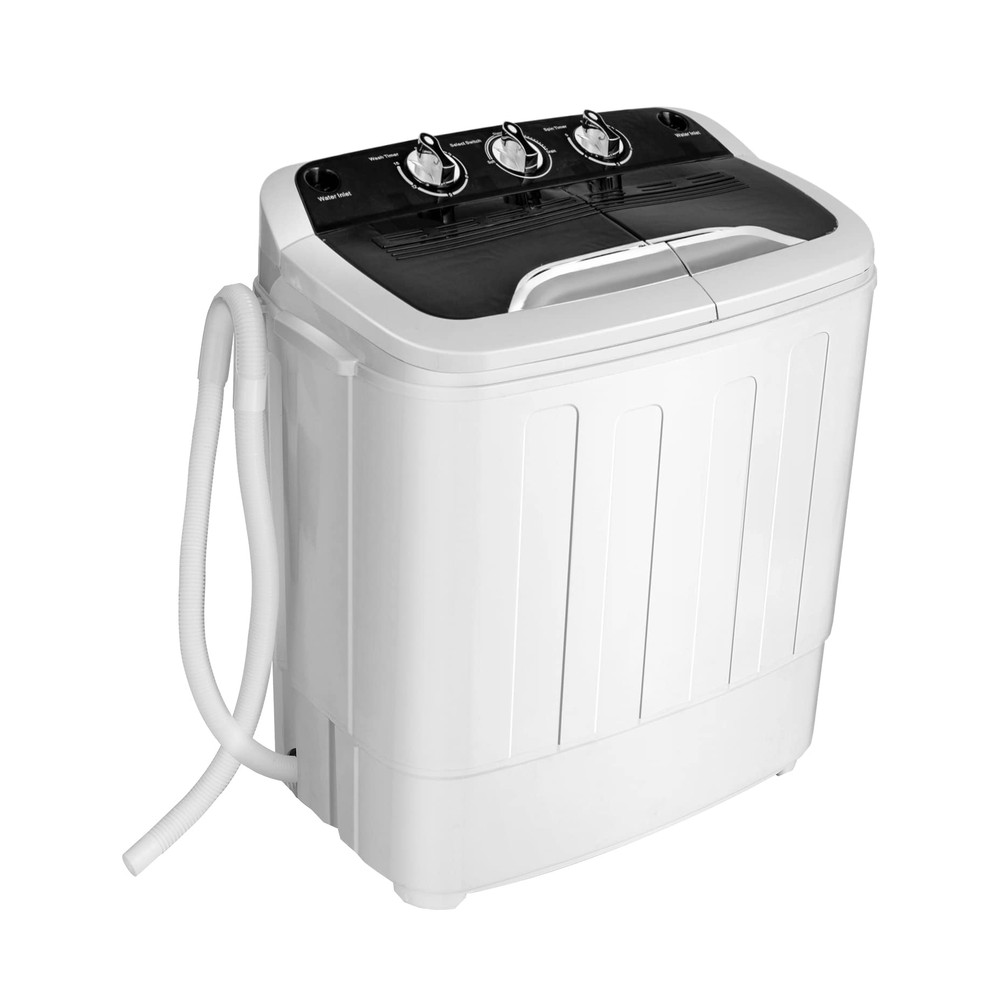
This is a twin-tub design: one side washes, the other spins the water out, and you move clothes between them by hand. Reported capacity is around 13 pounds in the wash tub and roughly 9 pounds in the spin tub, so the spin side is really meant for smaller batches at a time. You fill and drain the wash tub manually with a hose, set a wash timer, then transfer the load over to spin dry. It's faster and less physically demanding than hand-cranking, but it's still a hands-on process, not a load-it-and-walk-away machine.
Who this is actually for
RV owners, apartment dwellers without hookups, and off-grid setups running a generator or decent-sized power station. It suits someone who wants real machine-powered washing and spinning without needing the water line and drain hookup a fully automatic portable washer requires.
What to weigh before buying
- Moving wet clothes from the wash tub to the spin tub by hand is an extra step full automatic washers don't have. It's less work than hand-cranking, but it's not hands-off.
- Some owners report leaking around the tub connections or lid over extended use, worth checking during setup and the first few loads.
- The spin tub's smaller capacity than the wash tub means you may need to spin a load in two batches.
- It still needs mains or generator power to run, so it doesn't solve laundry during an actual outage the way a manual washer does.
The verdict
A reasonable middle ground for anyone with some power available who wants a real motor doing the work but doesn't need (or can't plumb in) a fully automatic unit. Just go in knowing you're still moving clothes by hand between the wash and spin sides.