
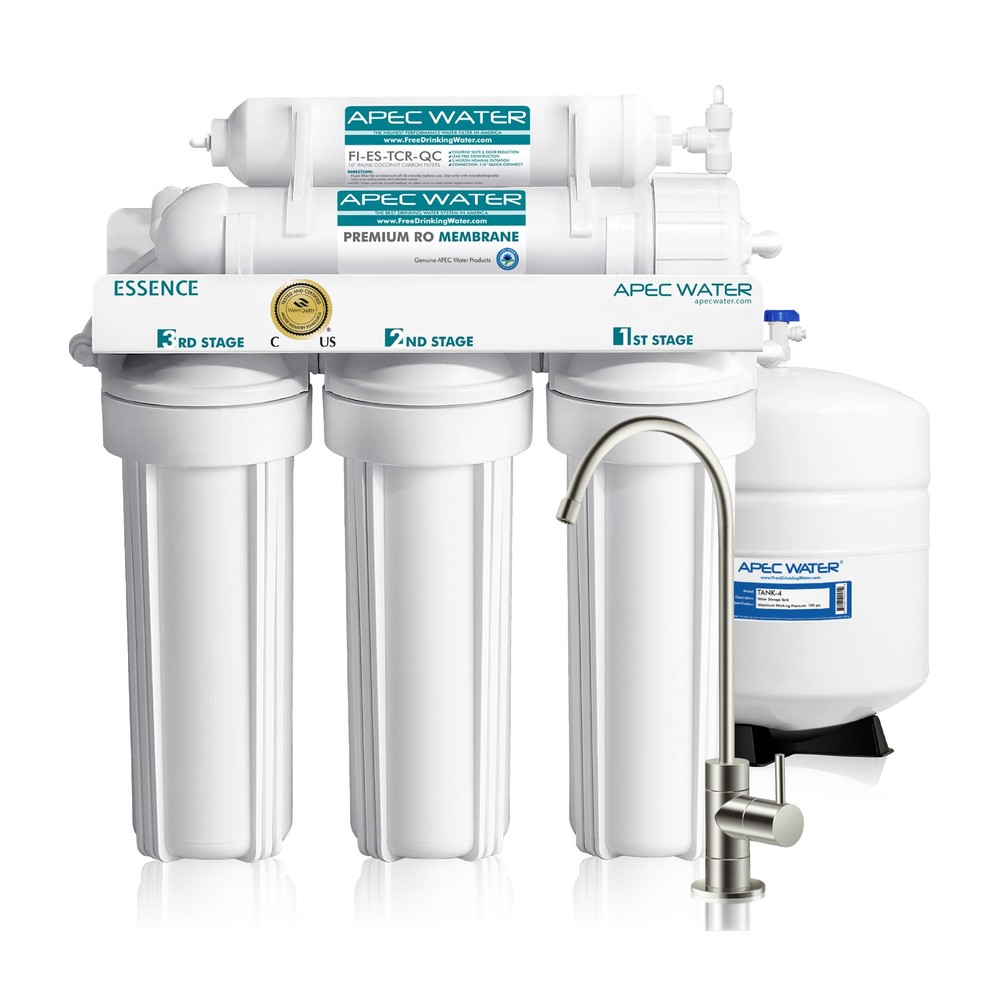
Why this made the list
A pitcher filters one batch at a time and only removes a narrow list of contaminants. This is the other end of the spectrum: a 5-stage reverse osmosis system installed under the sink, designed to strip out the large majority of dissolved contaminants, not just chlorine taste. APEC is one of the more established names in the DIY RO space, and this model, the ROES-50, is their standard mid-tier system.
What it actually does
Water passes through five stages: a sediment filter, two stages of carbon block filtration to strip chlorine and organic chemicals, the reverse osmosis membrane itself (which handles the bulk of dissolved contaminants including things like lead, arsenic, and fluoride), and a final coconut-shell carbon polish before it reaches the tap. It's WQA certified and rated to reduce roughly 99% of a wide range of impurities, a meaningfully broader claim than a standard carbon pitcher can make. It produces about 50 gallons per day at ideal pressure and temperature, less as pressure or temperature drops, and stores filtered water in a small pressurized tank rather than filtering on demand. Installation is genuinely more involved than any pitcher: it typically means drilling a hole in the sink or counter for a dedicated faucet, tapping into the cold water line, and installing a drain saddle on the drain pipe. APEC markets it as DIY-friendly with labeled tubing and included hardware, and many reviewers do install it themselves, but budget a real afternoon for it, not twenty minutes.
Who this is actually for
Someone who wants meaningfully cleaner water at the kitchen tap, not just better-tasting water, and who is comfortable with a moderate DIY plumbing project (or willing to pay a plumber for an hour or two of install time).
What to weigh before buying
- This is a real installation, not a plug-and-play device. You're drilling into a countertop or sink for the dedicated faucet and tapping the cold water supply line. If that's not something you want to attempt, factor in installation cost.
- RO systems waste water as part of the filtration process, some water goes down the drain to flush the membrane rather than coming out the tap. That's normal for the technology, but it's a real ongoing cost people don't always expect.
- Filters and the membrane need periodic replacement to keep performance up, that's an ongoing cost beyond the upfront price, unlike a pitcher where the swap is simpler and cheaper per unit.
- It only serves the one tap it's plumbed into, this isn't whole-house filtration. Every other faucet in the house is untouched.
The verdict
A legitimate step up from pitcher filtration if you want broad contaminant reduction at the kitchen tap and don't mind a real (if manageable) install. Not the right pick if you want something you can set up in a few minutes, or if you need water filtered at more than one tap in the house.