
These are the two laptop stands that come up most often when the requirement is "portable." They cost very different amounts, and the gap is not explained by build quality alone. They are built around different assumptions about what you are doing with a laptop.
Short answer first, then the reasoning.
Buy the Nexstand if you want the laptop off the desk, you are not fussy about the exact height, and the stand needs to live in a bag. Buy the Roost if you work at a laptop all day, you are tall or short enough that generic heights do not work, or you have specific neck or back issues to design around.
The actual difference
The Nexstand raises a laptop to one fixed height, roughly five and a half inches. That is it. It folds flat, weighs under half a pound, and disappears into a laptop sleeve.
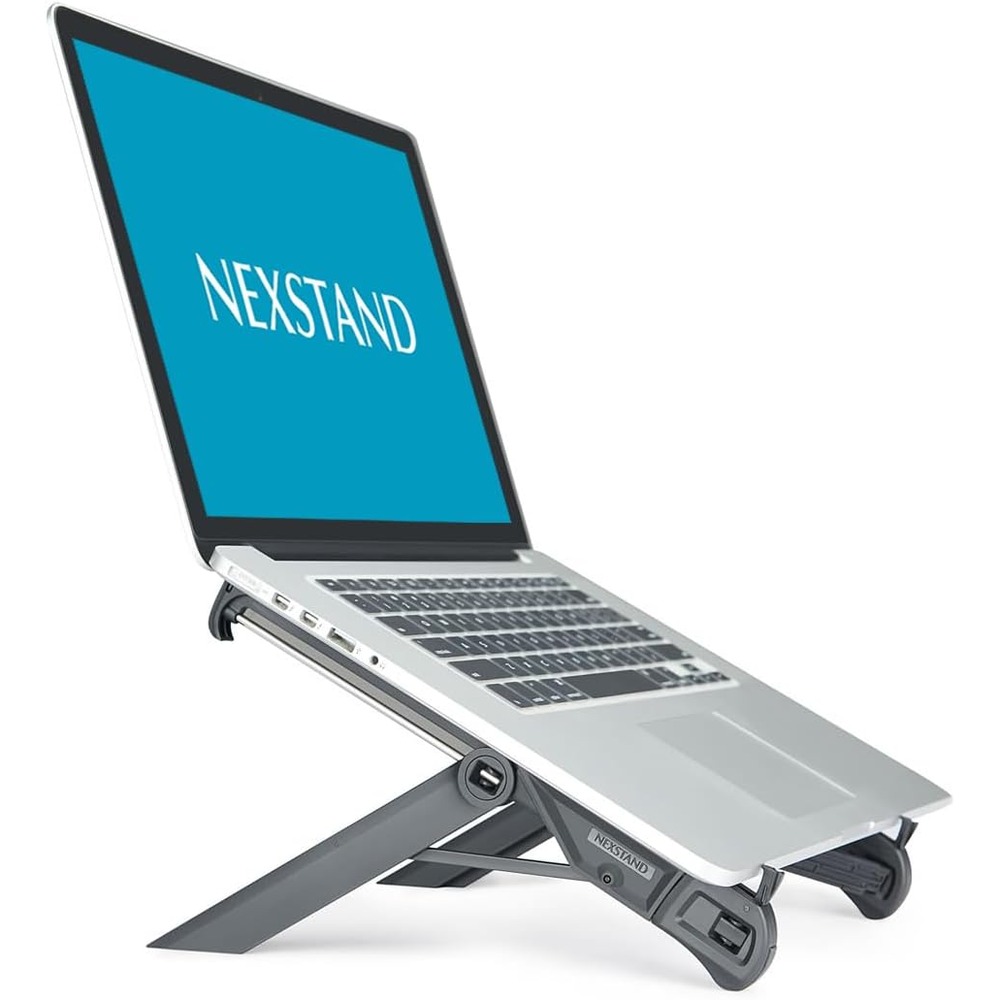
Nexstand K7
A featherweight, single-height riser that lives in a laptop bag. The grab-and-go budget pick.
The Roost adjusts continuously across a range, roughly six and a half to twelve and a half inches of screen lift. It uses a rigid folding structure with self-adjusting grips that hold the laptop rather than just supporting it.
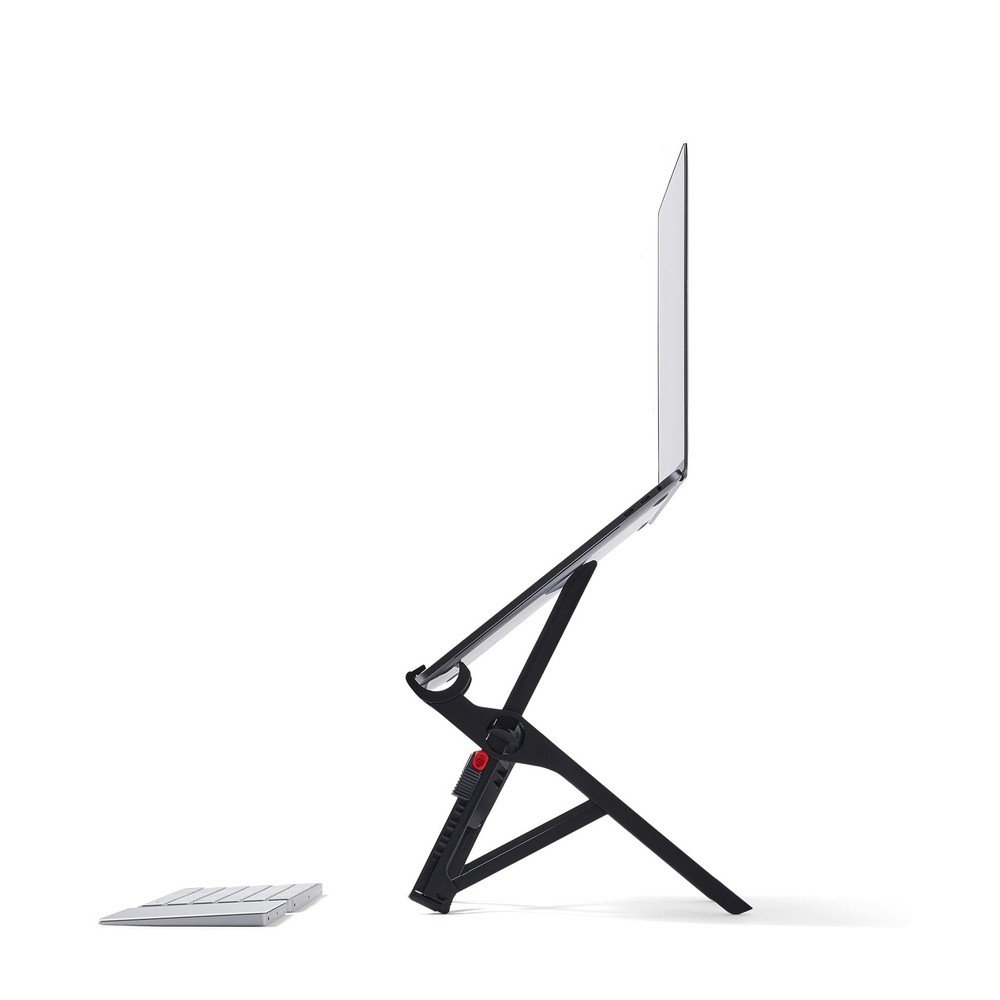
Roost Laptop Stand V3
The adjustable, foldable laptop stand that started the category. We use this one daily.
That adjustability is the entire price difference. Everything else, portability, folding design, the basic job of getting a laptop up off a desk, both stands do.
Why adjustability matters more than it sounds
The correct laptop height puts the top of the screen at roughly eye level when you are sitting upright. That height is different for a 5'4" person and a 6'2" person, and it is different again depending on chair height and desk height.
A fixed-height stand picks one answer. If you happen to land near it, great, and you just saved sixty dollars. If you do not, you are still craning, just less than before.
This is the honest test: sit at your desk, look straight ahead, and note where your eyes land relative to your screen now. If you are looking down significantly, a five and a half inch lift may not be enough on its own.
Build and stability
The Nexstand is fiber-glass reinforced nylon. It is light because of that, and it is the right material choice for something designed to be carried. Under a 13 or 14 inch laptop it is fine. Under a heavier 16 inch machine there is more flex than the Roost has.
The Roost is the more solid object. If you type hard, or the desk itself wobbles, that difference is noticeable.
Packability
Both fold small. The Nexstand folds to roughly 14 by 1.5 by 1.5 inches at about 0.45 lbs. The Roost is comparable in footprint but heavier and more rigid.
For genuinely daily transport, the Nexstand is the one you stop noticing. That matters more than spec sheets suggest, because a stand you leave at home because it is annoying to carry is worth nothing.
The case for owning both
Not a cop-out. At these prices it is a reasonable setup: the Roost lives at the main desk permanently dialed to the right height, the Nexstand lives in the bag. Total cost is still less than most single fixed-position aluminum stands, and neither one ever has to move.
If you are choosing one and genuinely cannot decide, start with the Nexstand. It is the smaller bet, and using it for a month tells you exactly whether fixed height is a problem for your body and your desk. If it is, you will know precisely what you are paying to fix.
What neither one solves
Raising the screen means the keyboard goes up with it, which puts your wrists at a worse angle. Both stands assume you will add an external keyboard and mouse. If you are not going to, a stand improves your neck at the expense of your wrists, which is a trade rather than a fix.
That is not a knock on either product. It is how laptop ergonomics work. Budget for the keyboard.